
Category: Turning

rippled sweet chestnut Bowl
Rippled sweet chestnut, also known as "fiddleback" or "tiger stripe" presents a figure that arises from the undulating growth rings within the tree, creating a series of parallel, shimmering lines that appear to move and change with the angle of light. The wood itself is typically a warm, medium brown with hints of golden or amber undertones, but the ripples add a dynamic layer of depth and luminosity.

Tigerwood Platter
Tigerwood, also known as Goncalo Alves, is a striking hardwood known for its dramatic, contrasting stripes that resemble the pattern of a tiger. The tree itself, Astronium graveolens, is a relatively large tree native to Central and South America, often found in the rainforests of Brazil, Mexico, and Guatemala.

A pair of Apple bowls
A local tree surgeon was cutting down an Apple tree in the neighbourhood and kindly offered the wood for reclaiming. Having spent a couple of years seasoning and drying in the fresh outside air it has turned some lovely bowls.

A special bowl in Crotch Olive Ash
Crotch olive ash wood, with its striking figure, is a testament to the beauty found in a tree's most intricate points. The "crotch," where the trunk splits into two or more large limbs, yields wood characterized by swirling grain patterns that converge and diverge in captivating ways.

Bowls In Ash, Iroko, Lime & African Walnut
As the title says, more bowls in Ash, Iroko, Lime and African Walnut. The African Walnut in particular is an interesting wood to turn.

5 Bowls. Cherry, Sycamore, Chestnut & Iroko
The bowls keep on coming. Many of these are cut from smaller blanks with the exception of the Iroko, probably my largest bowl yet.

A big batch of wands from leftover Sapele
This was a batch of wands created to raise money for a local charity, around 60 in total. They were produced from offcuts of Sapele reclaimed from a recycled front door and frame.

Oak Bowl
This blank was a lot bigger than I started, but a few incidents meant I had to turn it a few times to get the resultant project which is more of a snack dish than a bowl. I don't particularly enjoy turning oak as I haven't yet found a way to successfully turn it without excessive tearing.

Tulip bowl version 2
The very first bowl I turned was in Tulipwood. When I started out I was hesitant to try a thin rim at risk of ruining the project.

African Walnut Bowl
African Walnut (Lovoa trichilioides) grows in West Tropical Africa from a relatively small tree, standing on average 30-46 m tall with a trunk diameter of 0.6-1.2 m. It is typically a golden yellow to reddish brown, and tends to darken with exposure to sunlight and age.

Lime Wood Bowl
The Lime (Latin Tilia) tree, also known as Linden and (most commonly in the United States) Basswood, can reach a height of 40 metres and has a typical trunk diameter between one and two metres. The Lime wood species is unrelated to the citrus fruit.
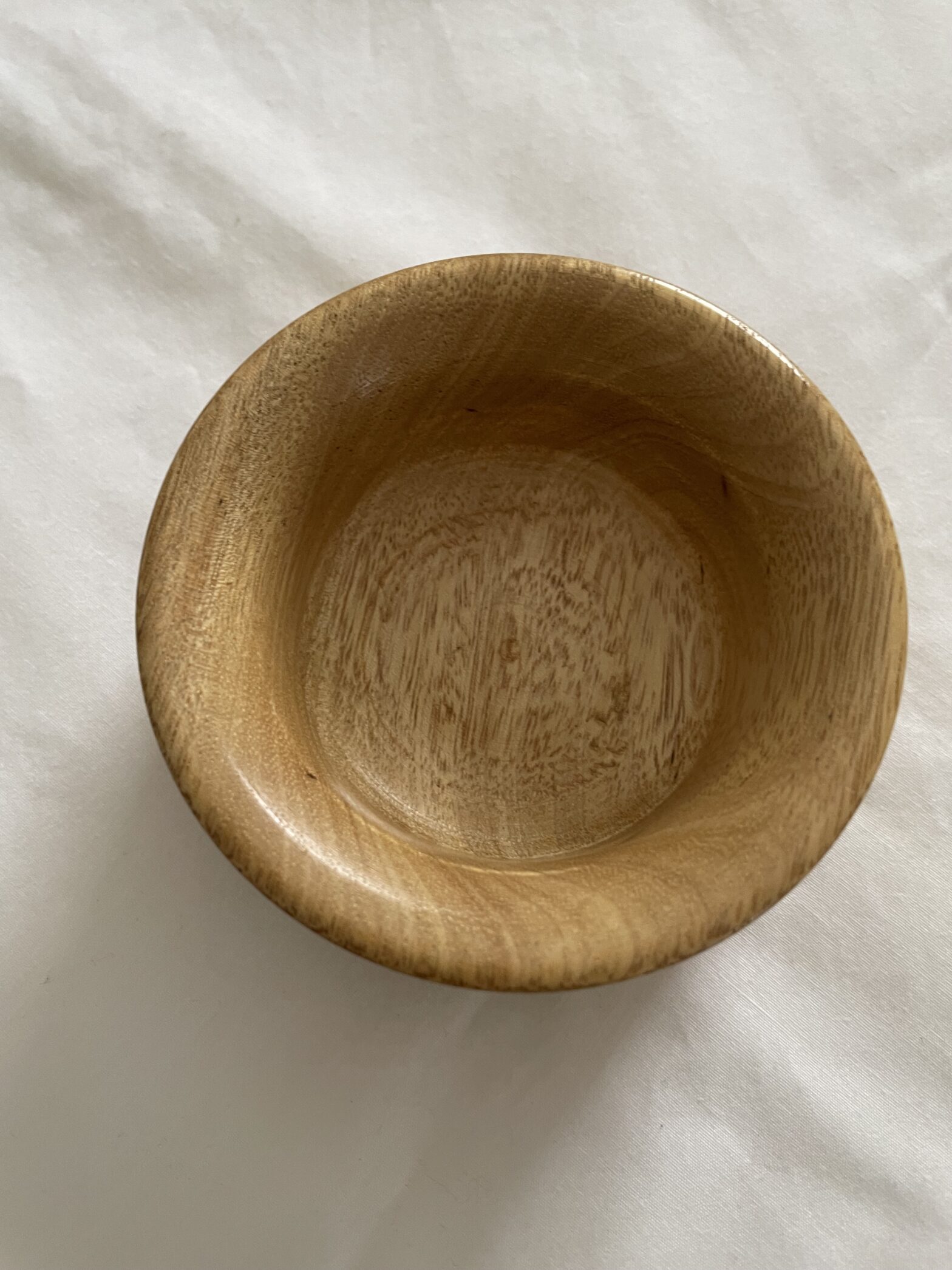
Idigbo Bowl
This bowl was turned from an Idigbo blank. I’d never heard of Idigbo (Terminalia ivorensis) which hails from west Africa and is commonly used in joinery due to its durability and stability, and limited moisture movement.
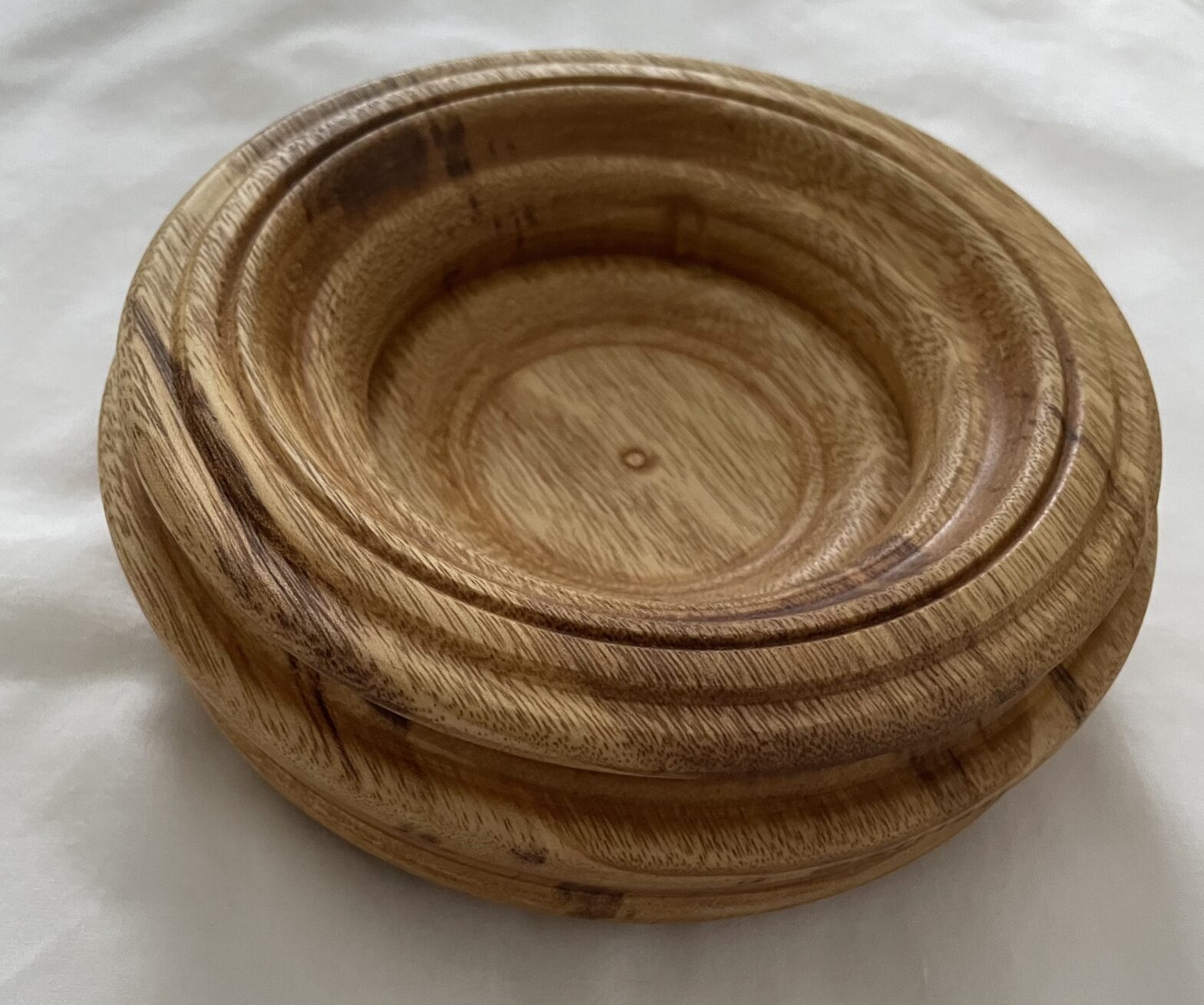
My First Turned Bowl (Tulipwood)
Described as "the greenish yellowish wood yielded from the Tulip tree found on the eastern side of North America and also in some parts of China". (Reference Wikipedia).