
Sweet chestnut behaves much like oak on the lathe—strong growth rings, coarse open grain, and plenty of tannin—but without the heavy medullary rays.
Medullary rays (often called wood rays) are cellular structures that run horizontally from the centre of a tree outwards towards the bark, perpendicular to the annual growth rings. In the living tree, their primary job is biological; they act as the trunk’s plumbing and storage network, moving sap, water, and nutrients laterally across the stem while storing food reserves for the tree.
Oak has massive, multi-seriate rays. On a turned bowl, these show up as silvery, reflective flecks or tiger-stripe patterns. Sweet Chestnut has tiny, microscopic rays that are essentially invisible to the naked eye, giving the wood a plain, uniform grain line without ray fleck.
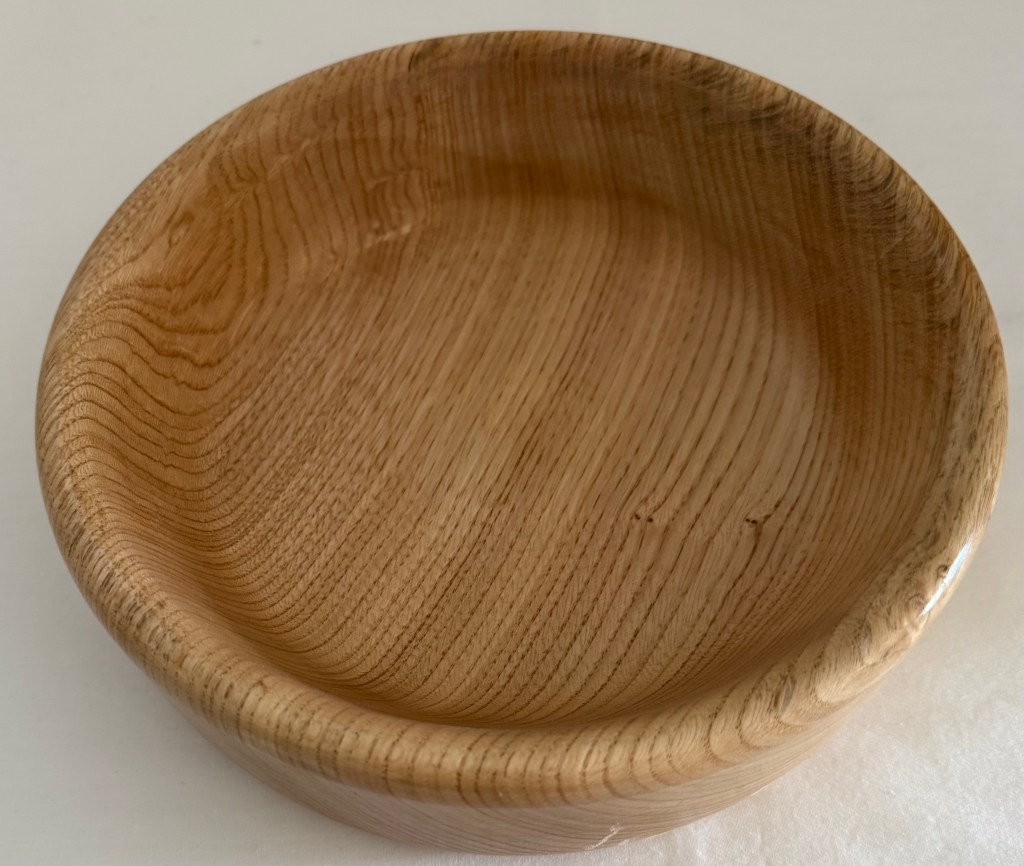
Sweet Chestnut is relatively lightweight and easy on tool edges, making for fast, satisfying roughing where the initial shape of the bowl is achieved. But the open grain needs careful finishing. A heavy coat of wax will just clog the pores, so it responds best to oil or thinner finishes. I used 5 coats of friction polish on this piece.


Share Your Thoughts